Ratgeber
Japanese vs English Pokémon sealed: what's actually different
Japanese and English Pokémon sealed are distinct products with distinct prices. What differs in packs, sets and art — and what to check before buying Japanese product.
Verfasst vom Cardheist-Team · Veröffentlicht 11.07.2026
Scroll through any Pokémon community and you'll find the same debate on repeat: Japanese or English sealed? The two markets look similar from a distance — same Pokémon, often the same artwork — but they are genuinely different products, made by different arms of the same franchise, priced by different supply and demand. Here's what actually separates them, and what to check before you put money into Japanese product.
Two markets, two release calendars
Japanese sets are designed and released for the Japanese market first; the international (English and other-language) versions typically follow later, and the mapping is not one-to-one. Some Japanese sets are split, merged or partially carried over when they become international sets, and some cards or products exist in only one of the two markets. That release gap is why Japanese product often gives you an early look at what the English market gets months later — and why "the same set" in both languages can have different contents.
Packs and boxes are built differently
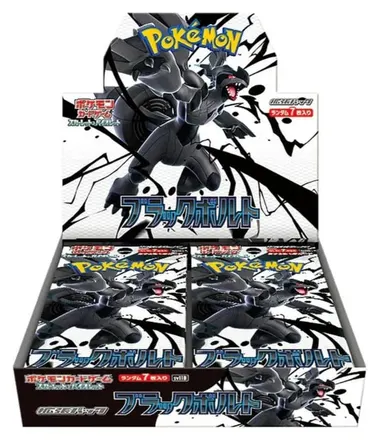
The physical product differs too. Japanese booster packs generally contain fewer cards than English packs, and Japanese booster boxes are structured differently — different pack counts and different conventions for how the rarer cards are distributed across a box. The exact structure varies from set to set and era to era, so don't rely on a blanket rule you read in a forum thread; check the specifics of the set you're buying. The practical takeaway is simpler: never compare a Japanese box to an English box on sticker price alone, because you're not buying the same amount or arrangement of product.
Print quality, exclusives and art
Japanese cards have a long-standing reputation among collectors for consistent print and centering quality, which is part of why Japanese product is popular with people who grade cards. Japan also gets exclusive products and promotional cards that never see an international release, and some illustrations or special sets debut there. None of this makes English product "worse" — English cards have their own exclusives and a much larger player base in the West — but it explains why serious collectors often end up buying from both markets rather than treating one as a substitute for the other.
Why the prices differ — and why that's fine
Because the two languages are distinct products, their prices move independently. Japanese sealed is often cheaper per box at release, partly reflecting the different pack structure and the enormous print supply of the home market; English product of the same generation can carry a premium from Western demand. But this is a tendency, not a law — hyped Japanese sets can outprice their English counterparts, and vice versa. Treat every comparison as product-vs-product, not language-vs-language.
The same logic applies within our price comparison: language editions are tracked as distinct products with distinct price histories, precisely because a Japanese box and an English box of the "same" set are not interchangeable. Comparing their charts side by side is the honest way to see which one is actually expensive right now.
What to check before buying Japanese sealed
- Confirm exactly which product it is. Japanese set naming, reprint waves and special sub-sets trip up newcomers. Match the set name and product type precisely before comparing prices.
- Buy from retailers you trust. Popular Japanese product attracts the same counterfeit problems as English product. The checks in our guide to spotting fake sealed Pokémon apply just as much here — arguably more, if you're less familiar with what authentic Japanese packaging looks like.
- Factor in the full landed cost. If you import, shipping, customs and VAT can erase an apparent bargain. A slightly higher price from a local shop that stocks Japanese product is often the better deal.
- Check the price history before you buy. Every product page here has a price chart and a price-analysis section. Japanese product hype comes in waves; buying into a spike is the most common mistake in this corner of the hobby.
So which should you buy?
If you're opening for fun, Japanese boxes offer a distinct experience and often a friendlier price of entry. If you're collecting for display or grading, the art exclusives and print reputation make Japanese product attractive. If you play in Western tournaments or want maximum liquidity when selling locally, English is usually the practical choice. Whichever way you lean, the discipline is identical: compare across the retailers we track, read the price history, and use the Heist Score to separate genuine deals from noise.
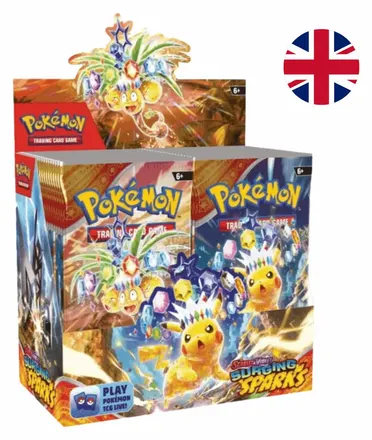
Here's the current English-market picture — booster boxes sorted by lowest price across our tracked retailers: